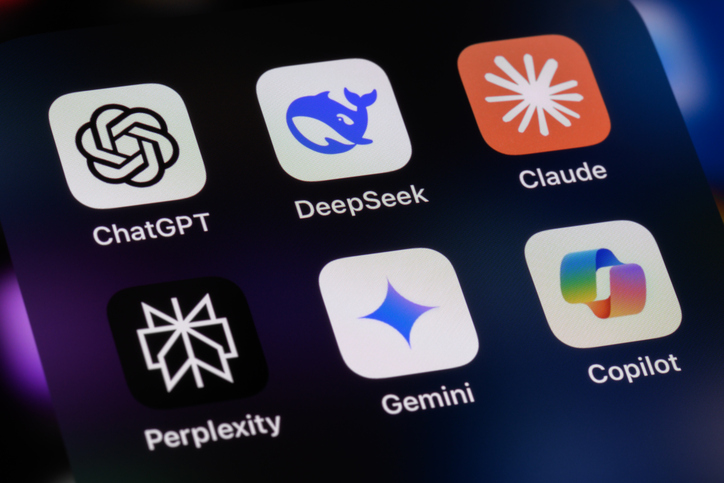

The "AI Race" has moved past the novelty phase. Today, business leaders and creators are no longer asking if they should use AI, but which AI is the right tool for the specific task at hand.
While the interface of a chatbox remains consistent across platforms, the "engine" under the hood varies significantly. Whether you are conducting deep-dive market research, drafting long-form content, or debugging complex code, choosing the wrong model can lead to hallucinations, outdated data, or a robotic tone.
1. ChatGPT: The Versatile All-Rounder
ChatGPT remains the industry benchmark for versatility. Its strength lies in its massive ecosystem, including custom GPTs, advanced voice modes, and robust DALL-E integration.
- Best For: Creative brainstorming, complex logic problems, and everyday task automation.
- The User Experience: ChatGPT tends to have a "can-do" personality. It is highly steerable, making it ideal for users who enjoy iterative prompting to refine a specific output. However, some users find its prose can occasionally feel "over-polished" compared to newer competitors.
2. Claude: The Master of Nuance and Context
Developed by Anthropic, Claude has carved out a niche as the "writer’s AI." Its most significant advantage is its massive context window and its focus on "Constitutional AI," which aims for safer, more human-like interactions.
- Best For: Long-form writing, technical documentation, and analyzing massive PDF files.
- The Difference: In head-to-head research tests, Claude often excels at following complex, multi-step instructions without losing the "thread." Its tone is frequently cited as more natural and less prone to the repetitive structural patterns seen in other models.
3. Gemini: The Power of Google Integration
Gemini (formerly Bard) is uniquely positioned because of its native connection to the Google workspace. It doesn't just "know" the internet; it lives within it, pulling real-time data from Maps, Flights, and Gmail.
- Best For: Real-time information retrieval, multi-modal tasks (video/image/text), and Google ecosystem users.
- The Technical Edge: Because Gemini can process vast amounts of information, including long video files - it is an incredible tool for summarizing meetings or extracting data from visual sources that would stump a text-heavy model.
4. Perplexity: The Research Powerhouse
Perplexity is fundamentally different because it functions more like a "conversational search engine" than a traditional chatbot. It prioritizes citations and real-world accuracy above creative generation.
- Best For: Fact-checking, academic research, and staying updated on breaking news.
- The Search Difference: While ChatGPT or Gemini might provide an answer based on training data, Perplexity browses the live web for every query, providing footnotes and links to its sources. It eliminates the "black box" feel of AI by showing you exactly where the information came from.
3 Actionable Takeaways for AI Adoption
To get the most out of these tools, consider a "multi-model" workflow rather than sticking to just one:
- Use Perplexity for the Foundation: Start your projects by gathering facts and links through Perplexity to ensure your data is current and cited.
- Use Claude for the Draft: Feed those facts into Claude to generate a first draft. Its superior context window will allow it to keep the entire project’s scope in mind.
- Use ChatGPT for Logic and Formatting: Once you have a draft, use ChatGPT’s advanced reasoning to structure the data, create tables, or generate code snippets for the project.
Conclusion
By understanding that ChatGPT is your versatile architect, Claude is your nuanced editor, Perplexity is your factual librarian, and Gemini is your integrated digital assistant, you can build a highly efficient, AI-augmented workflow that plays to the strengths of each model.
The "best" AI isn't the one with the most parameters, it's the one that fits the specific logic of your current task.